

Origen
Place where a person comes from, where he was born
Regulatory framework
- -Hague Convention
- -CE: art 39.2 dº to investigate parenthood-motherhood; art 14 dº to equality
- -Cc
- -International Adoption Law 2007
- -Adolescence and Adoption Law July 2015
- -RD 573/23 of 4 July approving the International Adoption Regulations repeals the RD 165/19
Art 12 International Adoption Law: Right to know biological origins.
The adopted people, reached the age of majority or during his minority through his legal representatives, They will have the right to know the data that exists about their origins held by Public Entities, without prejudice to the limitations that may arise from the legislation of the countries of origin of the minors.
This right will be effective with the advice, the help and mediation of the specialized services of the Public Entity, accredited bodies or entities authorized for this purpose.
The competent Public Entities will ensure the conservation of the information they have regarding the origins of the child., in particular information regarding the identity of their parents, as well as the medical history of the child and his family.
Accredited organizations that have brokered the adoption must inform Public Entities of the data they have about the origins of the minor.
It is a very personal right (indelegable, exercisable only by its owner, since the age of majority, although sometimes their representatives can exercise it). It is also an imprescriptible right and experts say that, apart from health reasons, The desire to meet parents usually arises in adolescence, or when the adopted person is a father or mother.
Art 5.1 Organic Law 1/1996, of 15 January, of Legal Protection of Minors: Right to information
Minors have the right to search, receive and use information appropriate to their development. Special attention will be paid to digital and media literacy, adapted to each evolutionary stage, that allows minors to act online safely and responsibly and, in particular, identify risk situations derived from the use of new information and communication technologies as well as the tools and strategies to face these risks and protect oneself from them.”.
WAYS OF APPROACH TO THE ORIGINS
- TRIP TO THE COUNTRY OF ORIGIN
- ACCOMPANIMENT WORKSHOPS WITH FAMILY MEDIATOR
- SUPPORT NETWORKS
- IMPACT OF ICT ON THE SEARCH: ANALYZE THE CURRENT SITUATION OF DNA BANKS
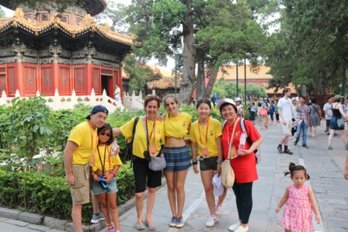
MY LAND”: A JOURNEY TO MY ORIGINS
Who does not know his origin, his destiny unknown. (Anonymous) What scares you most in the world?? What do you find impossible to face?? When you have identified that fear, that fear that is the origin of all the others, then you will no longer have any fear and, at last, you will become yourself (Katherine Pancol).
If one does not want to lose the axis in life, You should never forget where you come from and who you are.. (Gabriel Rolon)
ORIGIN is the place from which a person comes, where you were born or where your family began.
According to the RAE, The word “origin” refers to the BEGINNING, at birth, at the beginning, to the root, or to the source or cause where something has its beginning.
This is how this exhibition was born, from the feeling and the need, of the growth and development that every person experiences, from its roots and beginnings that make up its origins. It is a right of every human being, unique and personal, Without which the development of a personality and a healthy and happy life would be very difficult..
This exhibition shows us a journey that will allow us to feel, taste and smell the corners of a very special trip. It will transport us to a place so known and expected, to feelings and emotions rediscovered, to the home that our soul longs for, at the birth of our children, to the place where they were born and we meet them, to the ORIGIN OF THE HISTORY OF OUR LIFE.



“Many little people,in small places,doing small things,
can change the world
Eduardo Galeano